

Japandi style combines the minimalism of Japanese design with the warmth of Scandinavian interiors, creating a serene, cozy bedroom atmosphere. This blend of sleek lines, natural materials, and neutral tones helps to create a space that feels both relaxing and functional. Whether you want a peaceful retreat or a modern sanctuary, these 21 Japandi bedroom ideas will help you achieve the perfect cozy and balanced design.
1. Neutral Color Palette
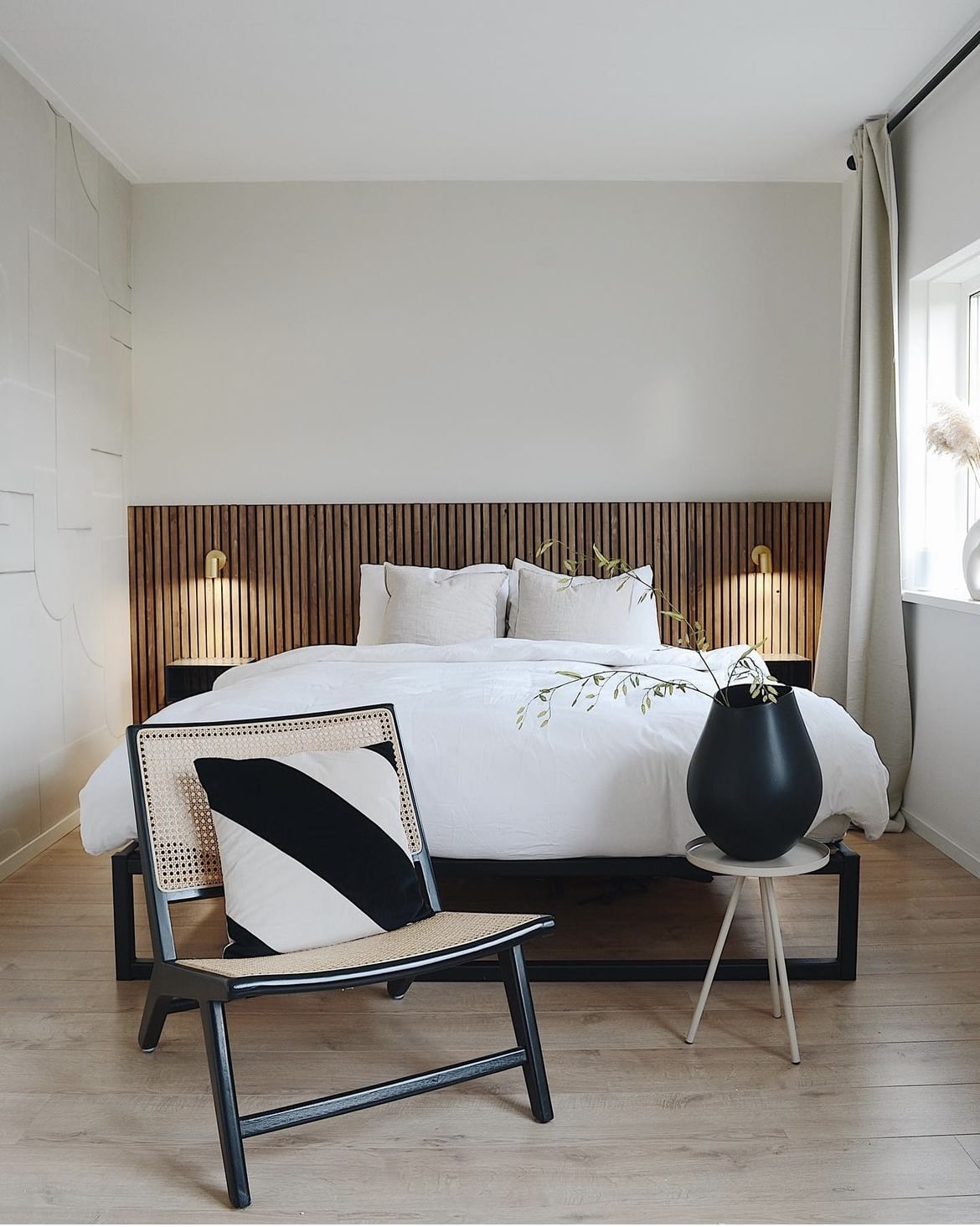
A neutral color palette is key to achieving the calm, minimalistic look of Japandi style. Opt for soft beige, light gray, or muted whites for the walls and bedding, paired with natural wood furniture. This creates a peaceful and serene environment that encourages relaxation. You can layer in subtle textures through throws or cushions to add warmth and depth without overpowering the simplicity of the space.
This approach to color works well in smaller bedrooms, as it helps to open up the space, making it feel larger and airier. The neutral tones allow the focus to shift to the beauty of the furniture and natural elements, such as wood, rattan, and plants, making the room feel balanced and cohesive.

2. Minimalist Bed Frame
A minimalist bed frame with a low profile is a hallmark of Japandi design, emphasizing simplicity and functionality. Choose a wooden frame with clean lines and a natural finish to maintain the calm, soothing feel of the room. The low-profile bed encourages a sense of spaciousness and offers a grounded, earthy vibe that complements the overall minimalist aesthetic.
Pair the bed frame with simple, cozy bedding in neutral tones or natural fabrics like linen or cotton. This design keeps the focus on the beauty of the materials, while the understated bed provides a serene and comfortable place to rest. The minimalist bed frame sets the tone for the entire Japandi bedroom, making it a calm retreat.
3. Wooden Accent Wall
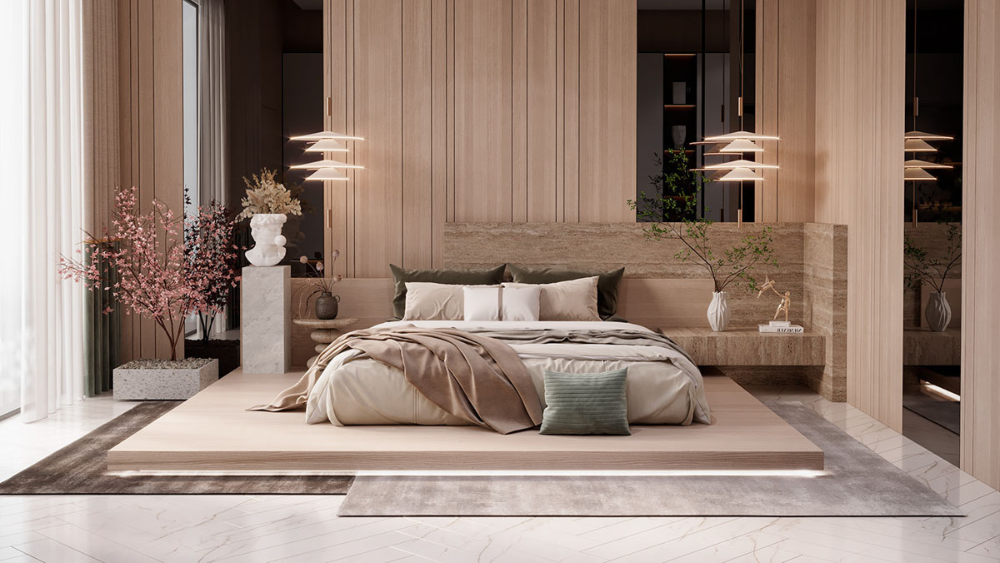
A wooden accent wall adds texture and warmth to a Japandi bedroom, making the space feel cozy and inviting. Opt for light wood paneling or a subtle wooden slatted design that complements the neutral tones of the room. This feature enhances the natural, earthy vibe while keeping the overall design minimal and calming.
The wood accent wall serves as a focal point that draws attention without overwhelming the space. Pair it with simple decor elements such as woven baskets, plants, or understated lighting to maintain the clean lines and serenity characteristic of Japandi interiors. This addition creates a harmonious blend of natural elements and modern simplicity.
4. Scandinavian-Inspired Lighting
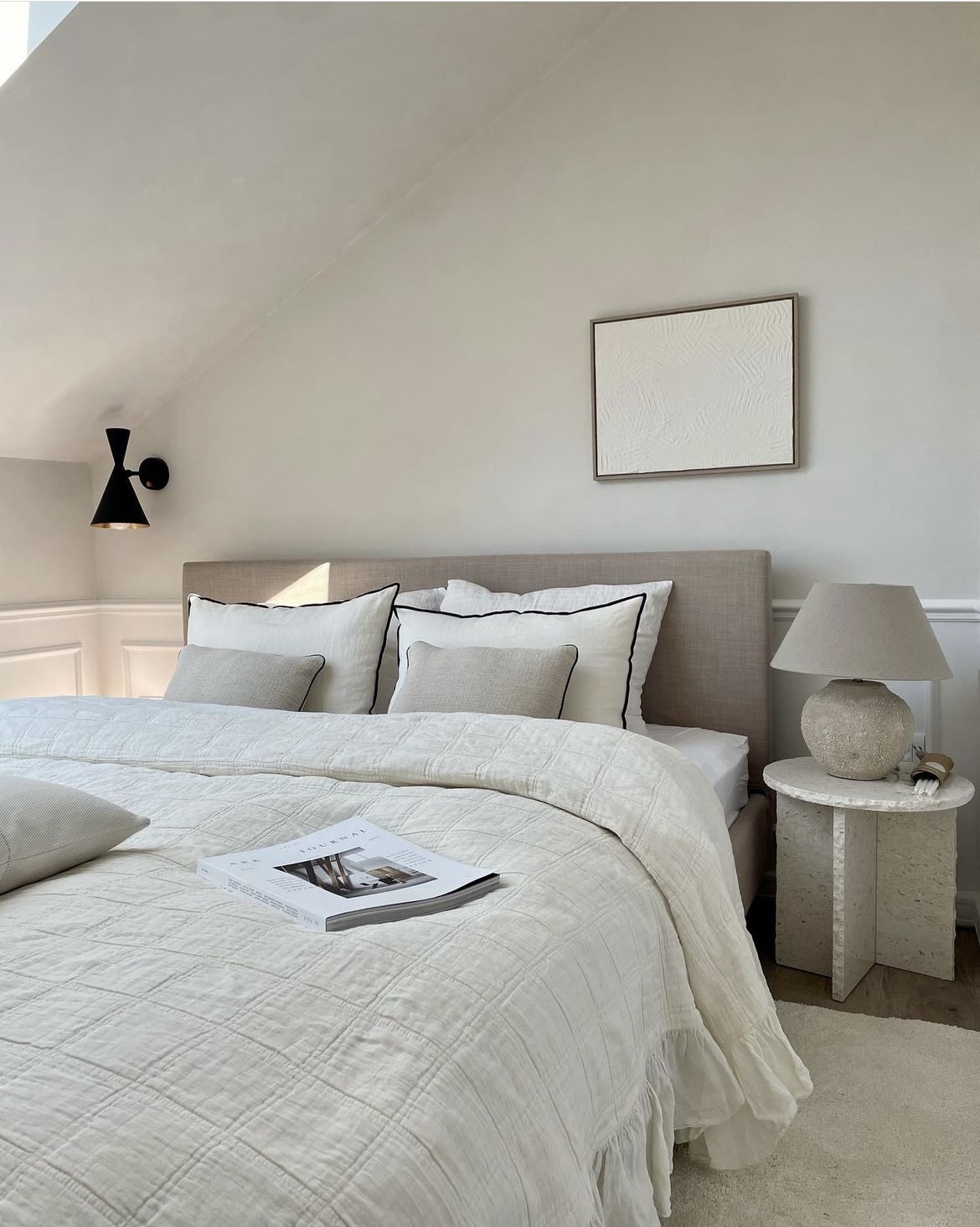
Scandinavian-inspired lighting is essential for a Japandi bedroom, as it brings both functionality and ambiance to the space. Opt for simple pendant lights or minimalistic wall sconces with warm light to create a soft, inviting glow. Lighting plays a significant role in making a Japandi bedroom feel cozy, especially when paired with neutral tones and natural materials.
Choose lighting fixtures with clean lines and a minimalist design to maintain the serene aesthetic of the room. Avoid harsh, bright lighting; instead, go for dimmable options or warm light bulbs to create a calming atmosphere. Subtle lighting adds depth and warmth to the room, enhancing the cozy feel of the Japandi bedroom.

5. Tatami-Inspired Flooring
Tatami-inspired flooring is a wonderful addition to a Japandi bedroom, providing a traditional Japanese touch while maintaining the minimalist aesthetic. You can incorporate tatami mats or woven rugs to create a soft, grounded feel underfoot. These materials add texture and warmth, making the room feel more inviting and cozy while staying true to the simplicity of Japandi design.
Pair the tatami flooring with natural wooden furniture and soft, neutral bedding to maintain a harmonious and balanced look. This type of flooring works well in both small and large spaces, helping to define the layout while creating a cozy, tranquil retreat.
6. Hidden Storage Solutions
Incorporating hidden storage solutions is an effective way to maintain a clutter-free, minimalist Japandi bedroom. Consider under-bed storage, built-in wardrobes, or multi-functional furniture that provides extra space without disrupting the room’s simplicity. These clever storage solutions help keep the focus on the design and materials rather than on clutter.
By maintaining a clean and organized space, the room feels more spacious and calming. Japandi design encourages the idea of less being more, so hidden storage helps achieve that by ensuring everything has its place without detracting from the room’s serene ambiance.
7. Simple Greenery
Bringing in simple greenery is a key element of Japandi design, as plants add life and freshness to the room while maintaining the organic, calming atmosphere. Choose low-maintenance plants such as succulents, ferns, or small indoor trees that thrive in minimal light. Place them in neutral-colored pots or natural woven baskets to keep the aesthetic cohesive.
A few strategically placed plants can create a harmonious connection to nature, enhancing the calming ambiance of the bedroom. Greenery also helps purify the air and contributes to a healthier living space. This addition makes the room feel more vibrant and cozy without disrupting the minimalist design.
8. Woven Textiles
Incorporating woven textiles into your Japandi bedroom adds texture and warmth to the space while maintaining the minimalist aesthetic. Use woven throws, cushions, or rugs made from natural materials like cotton, wool, or jute to create a tactile experience. These textiles not only make the room feel cozy but also contribute to the natural, earthy atmosphere.
Layer different textures through throws and pillows to add visual interest without overcrowding the space. The woven elements enhance the simplicity of Japandi design, making the bedroom feel grounded and comfortable. This touch adds a cozy, inviting element to the minimalist design.
9. Sliding Shoji Screens
Sliding shoji screens are a traditional Japanese element that works beautifully in a Japandi bedroom. These screens, made from wood and rice paper, offer a soft, diffused light that creates a serene atmosphere. They can also serve as room dividers, creating privacy in an open-plan space while maintaining a sense of openness.
The soft, filtered light provided by the screens enhances the peaceful and calming vibe of the bedroom. Shoji screens add a timeless, elegant touch to the room, blending perfectly with the clean lines and natural materials of Japandi design.
10. Low-Profile Furniture
Low-profile furniture is a signature feature of Japandi design, contributing to the clean and spacious feel of the room. Opt for low wooden beds, minimalist nightstands, and simple chairs to keep the space grounded and uncluttered. This design choice creates a feeling of openness, allowing the room to breathe and making it feel more expansive than it actually is.
Low-profile furniture pairs well with soft lighting and neutral tones, maintaining the harmonious, balanced aesthetic of Japandi style. The simplicity and understated elegance of these pieces make the room feel cozy and comfortable without overwhelming the space.
11. Soft, Minimal Bedding
In a Japandi bedroom, bedding should be simple, soft, and made from natural fabrics. Opt for neutral-toned sheets and duvet covers made from linen or cotton to enhance the serene atmosphere. The emphasis is on comfort, with a minimalist design that creates a calm, restful space perfect for sleeping.
Avoid bold patterns or overly vibrant colors; instead, keep everything subtle and natural to reflect the overall calming and minimalist Japandi aesthetic. Simple, soft bedding adds a layer of coziness, making the room feel inviting and peaceful.
12. Zen-Inspired Decor
Zen-inspired decor is a natural fit for a Japandi bedroom, as both styles prioritize simplicity, tranquility, and balance. Integrate elements such as stone sculptures, bamboo plants, or simple wood accents to create a peaceful environment. These items should be understated yet meaningful, evoking a sense of calm and relaxation.
The decor should reflect the principles of Zen: less is more, and each item should serve a purpose or add to the overall harmony of the space. Zen-inspired decor elevates the calming vibe of your bedroom, enhancing the minimalist Japandi aesthetic.
13. Soft Textile Curtains
Soft, textile curtains are a great addition to a Japandi bedroom, allowing you to control natural light while maintaining the serene atmosphere. Opt for light linen or cotton curtains in neutral shades like beige, white, or gray to complement the minimal design. These fabrics allow light to filter through, creating a soft, diffused glow in the room.
Curtains add a layer of coziness and intimacy to the space without disrupting the minimalist aesthetic. They also provide practical benefits by offering privacy while maintaining the calming ambiance of your Japandi bedroom.
14. Simple Wooden Nightstands
Wooden nightstands are an essential part of Japandi bedroom decor, offering both functionality and style. Choose simple, wooden nightstands with clean lines and a natural finish to complement the overall minimalist look. These nightstands provide space for essentials like a lamp, books, or a plant, while maintaining the serene atmosphere of the room.
The use of natural wood emphasizes the earthy, organic qualities of Japandi design, bringing warmth and balance to the space. Simple nightstands help keep the bedroom clutter-free and organized, while adding subtle elegance to the room.
15. Paper Lanterns
Paper lanterns bring a soft, ambient glow to a Japandi bedroom, creating a calming and peaceful atmosphere. These traditional Japanese lanterns are perfect for adding a warm, inviting light to the room without overwhelming the design. The paper lanterns’ soft light enhances the minimalist aesthetic, contributing to the serene ambiance.
Hang the lanterns in clusters or place them on the floor to create a cozy, intimate environment. The simple design of paper lanterns complements the clean lines of Japandi furniture and decor, adding a touch of softness and elegance.
16. Soft Natural Rugs
A soft, natural rug is the perfect finishing touch for a Japandi bedroom. Choose a woven rug made from materials like jute, wool, or cotton in neutral tones to complement the minimalist design. The texture of the rug adds warmth and comfort, enhancing the cozy feel of the room while maintaining the clean, simple aesthetic.
Place the rug beneath the bed or in the center of the room to define the space. A natural rug ties the decor together, adding a tactile element that helps the room feel grounded and cozy.
17. Sliding Glass Doors
Sliding glass doors provide a seamless connection between your Japandi bedroom and the outdoors, bringing in natural light and offering beautiful views. These doors allow you to create an airy, spacious feel in your room while maintaining the clean lines and minimalist style that characterize Japandi design.
Choose frames made from natural wood or metal to complement the overall aesthetic. Sliding glass doors open up the room and make it feel larger while letting in the natural beauty of the outdoors, further enhancing the serene, peaceful environment of your bedroom.
18. Simple Desk Corner
A simple desk corner is a great addition to a Japandi bedroom, especially if you need a space for working or reading. Opt for a sleek, wooden desk with clean lines and a neutral color palette that blends seamlessly with the room’s overall aesthetic. This space should be uncluttered, with minimal decor to maintain the calming vibe.
Keep the desk organized with just the essentials: a plant, a lamp, and perhaps a few books. A desk corner offers functionality without detracting from the room’s minimalist style, helping to create a peaceful and productive space.
19. Stone or Ceramic Accents
Incorporate stone or ceramic accents into your Japandi bedroom to add texture and natural beauty. Simple ceramic vases, stone sculptures, or decorative bowls can be used to enhance the calming, organic feel of the room. These elements connect the space to nature, helping to evoke a sense of tranquility and balance.
The use of natural materials like stone and ceramic ties in with the Japandi principle of simplicity, creating a space that feels grounded and serene. These subtle accents add just the right amount of detail to your minimalist bedroom.
20. Bamboo Elements
Bamboo is a natural, eco-friendly material that adds warmth and texture to a Japandi bedroom. Incorporate bamboo furniture pieces like a bed frame or side table, or add bamboo decor elements such as woven baskets, curtain rods, or wall hangings. Bamboo brings a touch of nature into your bedroom while aligning with the simplicity of Japandi design.
Bamboo is light yet durable, making it a practical choice for small apartments or minimalist rooms. The soft, earthy tones of bamboo add depth and serenity to your Japandi bedroom while maintaining an organic and calming atmosphere.
21. Japanese Kintsugi Decor
Japanese Kintsugi, the art of repairing broken pottery with gold, is a beautiful and meaningful addition to a Japandi bedroom. Incorporate Kintsugi decor elements such as vases, bowls, or artwork to add character and symbolism. These repaired pieces tell a story of imperfection and beauty, perfectly aligning with the Japandi aesthetic of simplicity and natural elegance.
These unique decor items can become focal points in your bedroom, reflecting both your personal style and the timeless beauty of Japanese craftsmanship. Kintsugi decor adds depth, warmth, and a philosophical touch to the overall design.